

Licube
Innovation in lithium extraction

Written by Helena Hilburn
As we’ve discussed before here at Atmosphere, lithium supply remains a hot topic in the climate technology world. Essential for most battery production, the supply has become more crucial than ever due to the demand created by EVs. Forecasts suggest lithium demand may outpace supply within the next decade, with production currently concentrated in just a few regions: South America, Australia, and China.
Due to these concerns, alternative methods of extracting lithium are gaining attention. One such potential source is the “produced water”. This is a byproduct of oil production and comes out of the well with the crude oil before it is separated and treated. It can contain a range of other substances including the oil, chemicals used in production, and various dissolved or suspended solids. Its ratio to water in the oil production process can be anywhere from 3 to 20.
Licube, with its advanced electrodialysis system, offers an economically viable solution for extracting lithium from this challenging source. Existing lithium extraction methods struggle to be cost effective due to the high levels of impurities in oilfield produced water and low concentrations of lithium, but, because of the scale and existing infrastructure of oil operations in countries like the United States, there is strong potential for the amount of lithium extractable with estimates even up to 20% of known lithium reserves.
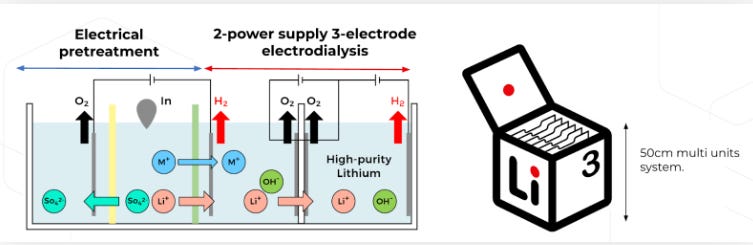
Established in 2024 based on research developed by Professor Kazuya Sasaki at Hirosaki University in Japan, Licinr patented a “dual-power, three-electrode electrodialysis” technology. The system enables ultra-fast lithium extraction with a throughput exceeding 2,000 g/m²/h — more than 660 times faster than conventional technologies.
They emerged from stealth mode earlier this year with a $6 million seed round led by B Dash Ventures.
By efficiently removing lithium from oilfields, Licube can take waste from fossil fuel generation and use it to power clean energy adoption. We love to see it.
Liked this? Sign up to the Atmosphere Newsletter to learn more about next-generation, transformative technologies that are decarbonizing and improving how we live, travel, produce, and consume.